
Buying Guides
Yamaha Rivage PM5: Features, Workflow & Investment Guide
Jul
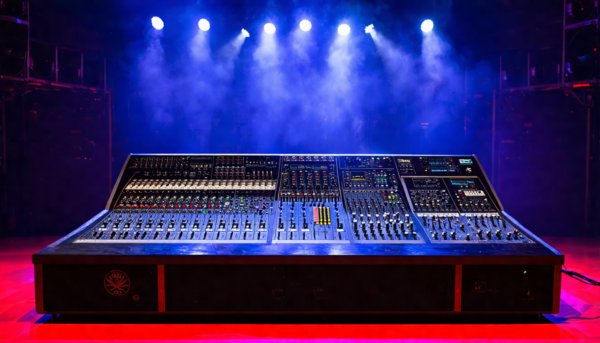
The Yamaha Rivage PM5 sits at the top of Yamaha’s digital console range, competing directly with DiGiCo’s Quantum series and Allen & Heath’s dLive C1500. It’s built for high-profile tours, festivals, and broadcast applications where channel count, processing depth, and reliability matter more than budget.
Rupert Neve Designs Processing — The Core Differentiator
The PM5’s headline feature is its Rupert Neve Designs SILK processing on every input channel. This isn’t marketing fluff — it’s analogue-modelled saturation derived from Neve’s transformer designs, giving digital channels a warmth and density that’s particularly useful on vocals and acoustic sources.
Two SILK modes are available: Red (iron transformer character, adds weight) and Blue (steel transformer, adds air and detail). Engineers can blend them per channel or disable entirely. On a 120-input festival mix, that flexibility matters — you’re not forcing every source through the same colour.
The console also includes Neve’s Portico 5033 EQ and 5043 compressor models across all channels. These aren’t approximations — they’re officially licensed DSP implementations. Combined with Yamaha’s own Premium Rack effects (reverbs, delays, modulation), the PM5 offers processing depth comparable to an Avid Venue S6L or Midas PRO X without relying on external plugins.
Dante Networking and I/O Architecture
The Rivage PM5 is a Dante-native console. All audio transport between the control surface, DSP engine, and I/O racks runs over standard Dante infrastructure. This makes integration with other Dante-equipped gear — wireless mic systems, stage boxes, recording interfaces, broadcast feeds — straightforward.
Maximum channel capacity is 288 processing channels at 96kHz. Most touring configurations run 120–144 inputs with 24–32 mix buses, which leaves headroom for expansion without needing a second DSP engine. The RPio622 I/O rack (64 in, 32 out) is the standard choice for FOH and monitor splits, with multiple racks easily cascaded over a redundant Dante network.
Compared to DiGiCo’s SD-Rack or Allen & Heath’s DX32, Yamaha’s I/O is less modular but more robust in harsh environments. Rental companies appreciate the simplicity — fewer card configurations, fewer failure points.
Workflow and Surface Layout
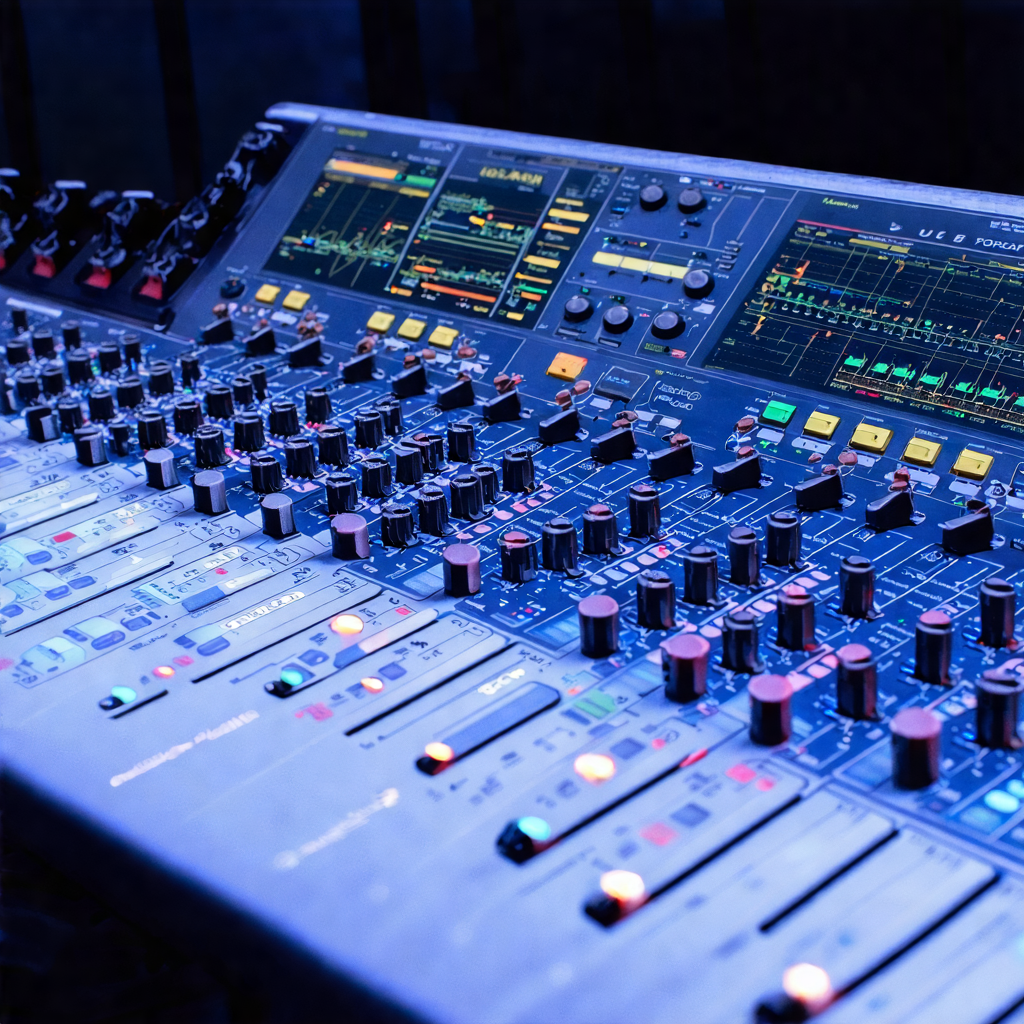
The PM5 surface uses Yamaha’s Centralogic layout: a central touchscreen flanked by two banks of faders (120 faders total on the largest configuration). The workflow is closer to a traditional analogue desk than the layer-heavy approach of an Avolites or MA3 lighting console — channels stay visible, reducing the need for constant screen navigation.
Key workflow features:
- Selected Channel section — dedicated controls for EQ, dynamics, and routing that mirror the selected fader. No menu diving.
- User-definable Custom Fader Banks — assign any channel, bus, or matrix to any fader position. Useful for complex monitor mixes or broadcast stems.
- Recall Safe — lock individual parameters (gain, routing, dynamics) from snapshot recall. Essential for live touring where mic gains and monitor sends need to stay constant between songs.
- Dual-operator mode — two engineers can work independently on the same console. One handles FOH mix, the other manages broadcast feeds or recording stems without stepping on each other.
The learning curve is steeper than a Yamaha CL5 but shallower than a DiGiCo Quantum 338. Engineers familiar with Yamaha’s LS9 or M7CL will recognise the menu structure.
Why Tours Choose the PM5
The Rivage PM5 appears on riders for several reasons, none of them about hype:
- Sonic consistency — the Neve processing delivers a recognisable sound that travels well between venues. Engineers can build a mix in rehearsals and trust it will translate to festival stages.
- Rider acceptance — it’s on the same tier as DiGiCo SD and Avid S6L. Production managers know rental houses stock it, so availability is rarely an issue.
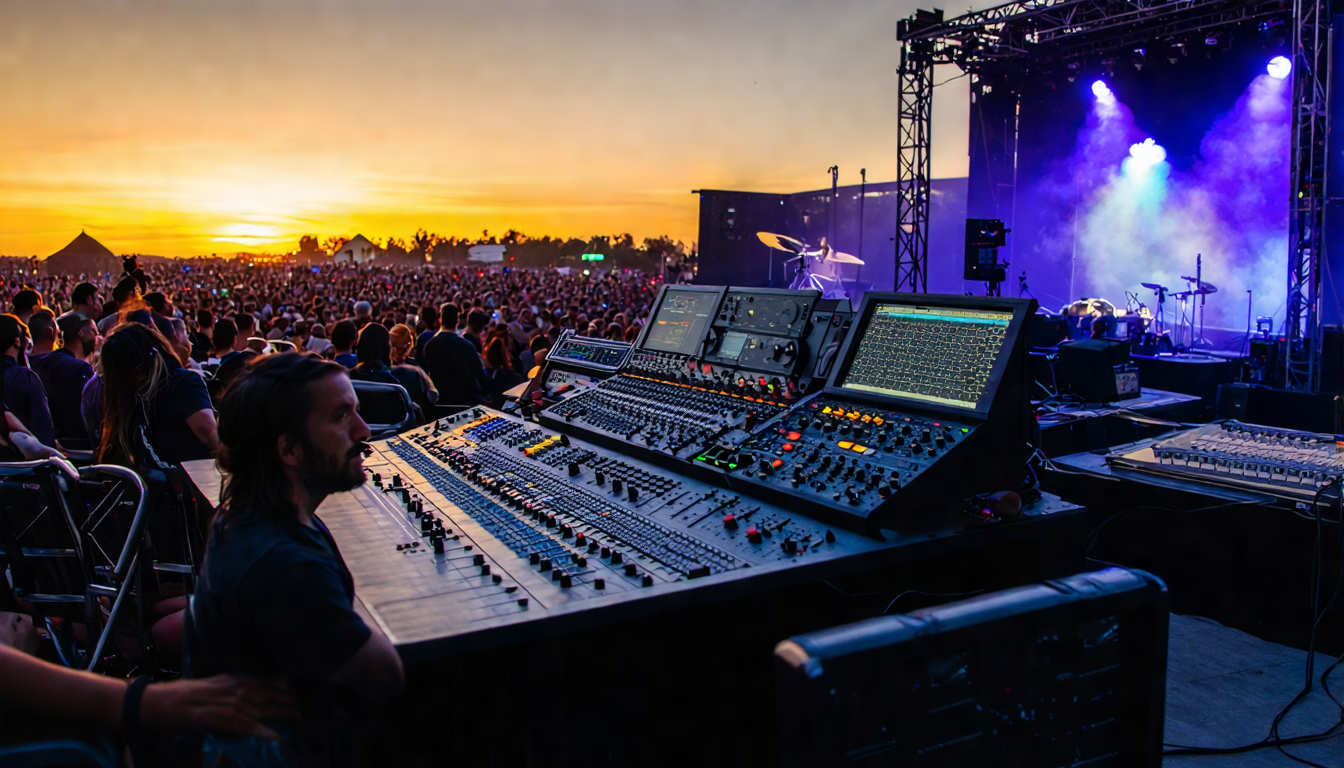
- Redundancy — dual DSP engines, dual power supplies, redundant Dante networking. The PM5 is built for tours where downtime costs tens of thousands per hour.
- Integration with Yamaha PA systems — if a tour is carrying Nexo or JBL line arrays (both distributed by Yamaha in some markets), the PM5 integrates cleanly with existing Lake or BSS processing chains.
It’s less common in corporate AV or installed venues, where Allen & Heath dLive or Midas M32 offer better value. The PM5 is a touring tool first.
Typical Configurations and Pricing
New pricing for a Rivage PM5 system (control surface, DSP engine, I/O racks) starts around £150,000–£200,000 depending on configuration. That’s comparable to a DiGiCo Quantum 225 or a fully-loaded Avid S6L-24D.
Used market pricing is more accessible, though stock is limited — most PM5 consoles stay in rental inventories rather than being sold on. When they do appear, expect 40–50% of new price for a well-maintained system with low hours.
| Configuration | Typical use | Price range (used) |
|---|---|---|
| PM5 CS-R5 surface + DSP-R10 engine + 2x RPio622 racks | FOH for mid-size tours, festivals | £80,000–£100,000 |
| PM5 CS-R10 surface + DSP-R10 engine + 4x RPio622 racks | Large-scale touring, broadcast | £120,000–£150,000 |
| PM5D-RH (legacy model, pre-Rivage) | Budget-conscious touring, regional venues | £8,000–£12,000 |
Note: Stock availability changes constantly. Prices reflect recent market trends but are not guaranteed.
Comparing the PM5 to Competitors
The PM5 competes with three main alternatives:
- DiGiCo Quantum 338 — more modular, deeper plugin integration, preferred by engineers who want total control over processing chains. Slightly higher new price, similar used market value.
- Allen & Heath dLive C1500 — better value, excellent for corporate and installed work. Less common on high-profile tours due to rider acceptance, though sonically competitive.
- Avid Venue S6L — stronger in broadcast and theatre applications. Requires external plugin licenses for comparable processing depth to the PM5’s built-in Neve tools.
If you’re choosing between these, the decision usually comes down to workflow preference and existing infrastructure. Engineers who’ve worked on Yamaha desks (CL, QL, M7CL) will find the PM5 intuitive. Those coming from DiGiCo or Midas will face a steeper learning curve.
What to Check When Buying Used
The PM5 is a robust console, but used purchases still require due diligence:
- DSP engine hours — check the service log for total power-on time. Anything under 5,000 hours is low use for a touring console.
- Fader condition — motorised faders wear out. Test every fader for smooth travel and accurate recall. Replacements are expensive.
- Touchscreen responsiveness — the central touchscreen takes a beating on tour. Dead zones or calibration drift indicate a screen replacement is due.
- Dante firmware — ensure the console and I/O racks are running compatible Dante firmware. Mismatched versions cause dropouts.
- Case condition — flight cases protect the console during transport. Inspect for cracks, broken latches, or water damage that might indicate rough handling.
Request a service history if buying from a rental house. Well-maintained consoles will have documented cleaning, calibration, and firmware updates.
Investment Value and Depreciation
Digital consoles depreciate faster than analogue gear, but the PM5 holds value better than mid-tier desks like the Yamaha QL or Midas M32. Expect 10–15% annual depreciation for the first three years, then a flattening curve as the console enters the used rental market.
Rental houses buying used PM5 systems typically amortise the cost over 5–7 years. For touring companies, the decision is more about rider acceptance than ROI — if your engineer specifies a PM5, you need a PM5.
Resale is easier than for less common desks. The PM5 has a global user base, so finding a buyer in Europe, North America, or Asia is straightforward. Compare that to a niche console like an Amek or Jands desk, where resale markets are limited.
Frequently Asked Questions
Is the Rivage PM5 worth the investment over a DiGiCo Quantum?
It depends on your workflow and existing infrastructure. The PM5’s built-in Neve processing is a major advantage if you want that sonic character without external plugins. DiGiCo offers more modular flexibility and deeper third-party plugin support. Both are rider-friendly, so choose based on which workflow suits your engineers.
Can the PM5 handle broadcast and live sound simultaneously?
Yes. The dual-operator mode and extensive matrix routing make it well-suited for broadcast stems, recording feeds, and live FOH mixes running in parallel. Many festivals use a single PM5 for both FOH and broadcast, with separate engineers controlling different outputs.
What’s the difference between the PM5 and the older PM5D?
The PM5D is a legacy analogue-style console from the mid-2000s, predating the Rivage series. It lacks Dante networking, Neve processing, and the Centralogic workflow. Used PM5D consoles are budget-friendly but not comparable in features or rider acceptance to the Rivage PM5.
How does the PM5 compare to the Midas Pro 2?
The Midas Pro 2 is a smaller, more portable console aimed at monitor engineers and smaller tours. The PM5 is a flagship FOH desk with significantly higher channel count, processing power, and I/O capacity. The Pro 2 is excellent for its size, but it’s not in the same class as the PM5.
Is the PM5 suitable for installed venues?
It’s overkill for most installed applications. The PM5 is designed for touring, where redundancy, rider acceptance, and sonic consistency matter more than cost. For installed venues, an Allen & Heath dLive or Yamaha CL5 offers better value unless you’re running a major arena or theatre with complex requirements.
Where can I buy a used Rivage PM5?
Used PM5 consoles are rare on the open market, as most stay in rental house inventories. When they do appear, expect to find them through specialist dealers or direct from rental companies downsizing fleets. Always request a service history and test the console thoroughly before purchase.
Find Your Next Console
The Rivage PM5 is a serious investment, but for tours and festivals where reliability and sonic quality are non-negotiable, it’s one of the best digital consoles available. Whether you’re buying new or used, understanding the workflow, I/O architecture, and market value helps you make a confident decision.
Browse our current stock of used audio equipment or get in touch if you’re looking for a specific console configuration.